DEVELOPMENT / 01Let the design owner lead the visual story
Tell us which place, organization, community, or brand the collection represents and who is responsible for the artwork. Supply designs you are entitled to use rather than asking manufacturing to invent a cultural identity. Identify motifs, text, arrangements, or meanings that must be preserved, and note any restrictions on placement or alteration.
DEVELOPMENT / 02Translate the artwork into a garment layout
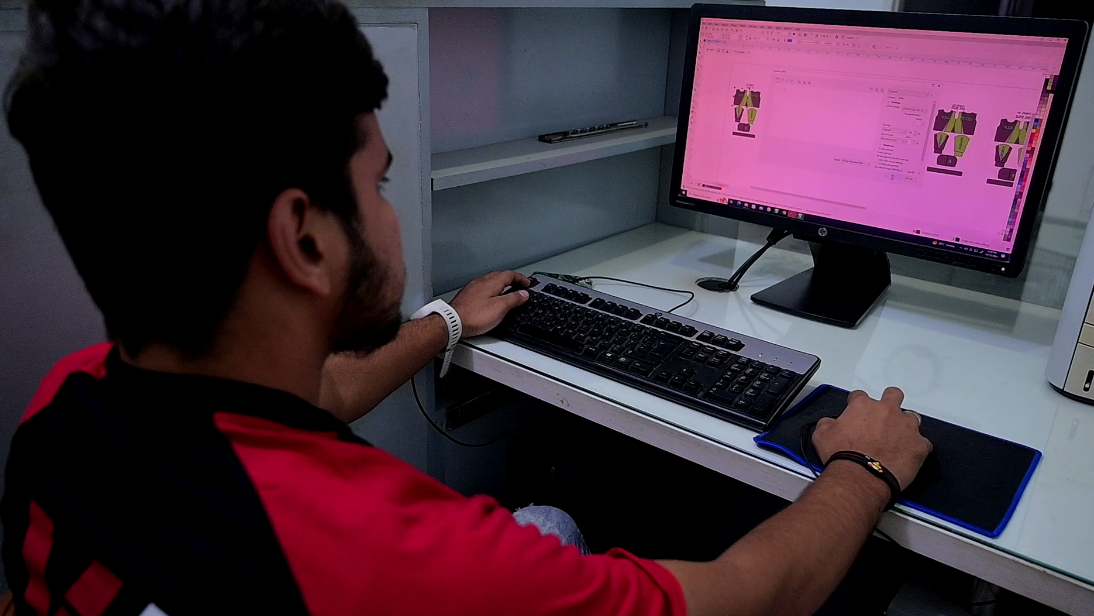
A flat design needs instructions for the actual garment. Define repeat size, focal positions, front and back layout, sleeves, collar or neckline, and relevant seams. Explain whether the artwork should continue across panels or be intentionally separated. Discuss how the design changes across sizes so smaller garments do not lose important elements by accident.
DEVELOPMENT / 03Choose the silhouette and material together
Describe the desired fit, drape, coverage, and garment role. A material that holds a shape and one that falls softly can present the same artwork differently. Compare the proposed fabric and colour, then review a complete decorated sample. Record whether artwork direction, stretch, or surface appearance influences the chosen construction.
DEVELOPMENT / 04Approve colour, placement, and fit physically
Review the sample for garment measurements, proportions, material feel, artwork scale, colour direction, panel joins, seams, labels, and finishing. Confirm which differences are acceptable and which need revision. Use marked photographs and dimensions for feedback, and keep the approved artwork version connected to the physical sample.
DEVELOPMENT / 05Plan a coherent collection and delivery
Break the order into garment styles, artwork versions, colours, sizes, and personalized variants. Confirm labels, product information, retail tags, folding, and packing. Identify who consolidates approvals, the required receiving date, and the destination. Minimums, development charges, material availability, and schedules are discussed for the actual range.